
Both are lines of stones on the wrist. That's where the similarity ends — they read completely differently, wear differently, and suit different people.
The tennis bracelet
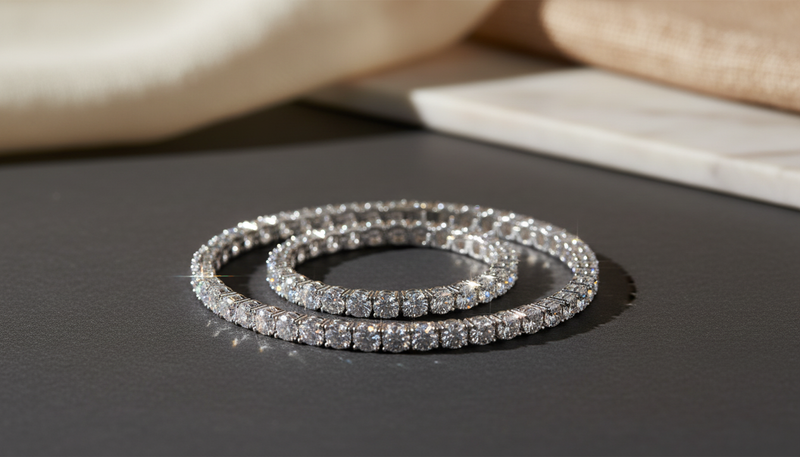
A single continuous line of individually set stones on a flexible chain. It drapes, catches light from every angle, and reads as classic rather than loud. It's the more formal of the two, and it's the one that works under a shirt cuff.
Downside: it's a thinner structure. A tennis line is more vulnerable to a hard knock than a chunky link bracelet, and a failed clasp means the whole thing comes off.

The cuban link bracelet
Interlocking links, each one pavé-set with stones. It has weight and presence — it reads streetwear rather than classic, and it's the more durable structure by a wide margin. If you're rough on jewellery, this is the one that survives.
Downside: bulk. A 10mm+ cuban doesn't sit under a cuff and doesn't dress down easily.
Which to buy
Tennis if you want something that works across occasions, layers with a watch, and reads as jewellery rather than a statement. Start at $249 with the 3mm Round Tennis Bracelet.
Cuban if you want presence and want it to match a chain. Our Iced Cuban Bracelet is $499, and the 3mm Iced Cuban Bracelet at $399 is the slimmer, more wearable version if you want the look without the weight.
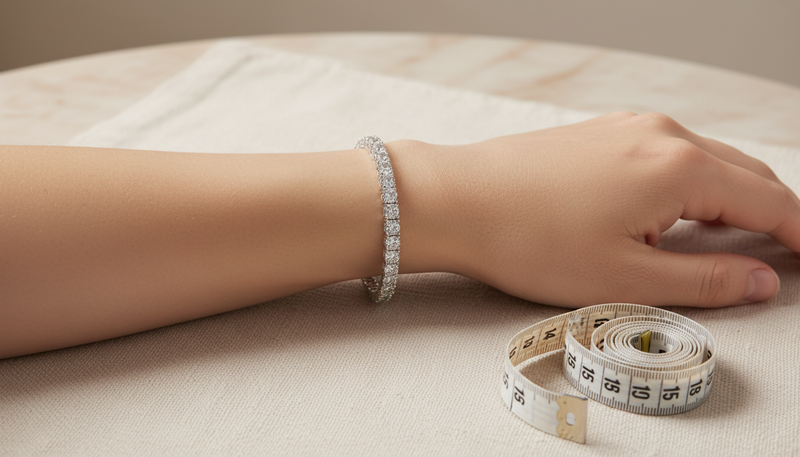
Both live in Bracelets. If you're matching a bracelet to a chain, the width logic is the same — see the Cuban Link Chain Width Guide. Size yourself with the Tennis Bracelet Size Guide.
Tennis vs Cuban Bracelet Questions
What's the difference between a tennis bracelet and a cuban bracelet?
A tennis bracelet is a single continuous line of individually set stones on a flexible chain — classic and slim. A cuban bracelet is interlocking links, each pavé-set with stones — heavier, bulkier and more streetwear in feel.
Which is more durable?
The cuban link, clearly. Its interlocking structure is far more robust than a thin tennis line, which is more vulnerable to hard knocks and clasp failure.
Can you wear a tennis bracelet every day?
Yes, and many people do. Keep it away from chemicals and take it off for heavy manual work or gym sessions where it could catch. See our care guide for specifics.
Which looks more expensive?
Neither reliably. A well-made tennis bracelet reads as more formal and classic; a cuban reads as more substantial. The tell for quality in both is stone consistency and whether the metal is sterling silver rather than plated brass.